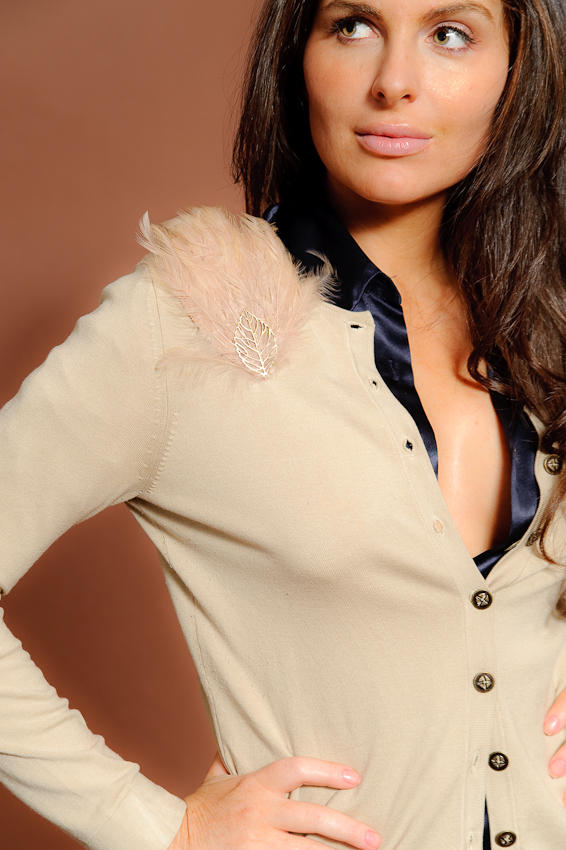
I did a test shoot on Saturday with a friend-of-a-friend (see if you can guess her name), who was a dream to work with. I wish all my subjects were this easy to work with.
I suppose it’s the nature of photography to work with people with vastly different amounts of experience as well as comfort levels in front of a camera. One day you’re doing headshots for an actor that is perfectly at home on stage but doesn’t know what to do in front of a still camera, the next you’re working with a model who’s done this so well for so long that she can break out killer poses with no direction needed whatsoever.
Ultimately, though, I like working with people I enjoy. I suppose that’s a no-brainer, really. Nobody wants to work with a diva or someone with an ego too big for their shoulders. But even if you remove the ego factor, I’d much rather work with a novice I have fun with than a pro I can’t really connect with.
Photographing people (some might say photographing anything) is all about connecting with your subject. And when you can have fun with the person, it shows. The best things happen when you experiment, and to do that requires trust.
Plus it makes the long hours on the field a lot more enjoyable.
I had a fashion shoot the other night. A friend (by way of being my cousin’s fianceĆ©) is a partner at a fashion label and they needed to update their website photos. This was a detail shot for one of their cardigans.
I’ve always noticed how photography seems to have more misconceptions about it than many other endeavors. There’s the classic The more megapixels, the better. The adorably naive Weddings are easy money. And that self-satisfied standby, All that’s stopping me from taking better pictures is a better camera/lens.
And one of my favorites, Fashion photography would be like a dream come true.
But while most of the other misconceptions are easily explained away (it’s not the number of megapixels, but size and quality, that count most; weddings are usually 10 hours of shooting plus 20 hours of post, and the pay is split with the assistant — it adds up; and a better camera won’t make you a better photographer any more than expensive clubs would make you a better golfer), that last one tends to be a little harder to dispel. After all, you spend a day surrounded by beautiful women that you see in various states of dress (and un-), and get paid to take pictures of them. Where’s the downside?
Except that it really is work like any other. Murphy’s Law is always in full effect, so you have to work harder to make up for him. Meanwhile, you have different personalities to learn how to navigate and negotiate, you have delays, late talent and crew, and so many pieces of equipment any one of them could go kaput at any time. And all the while you have to remain high-energy and inspire liveliness in your subjects.
At the end of the day, work is work is work. And while I’d rather photograph a beautiful woman than roadkill or crime scenes, ultimately it’s still a job. And god forbid you meet a … challenging personality. You’ll soon find yourself longing for safer work. Like photographing the insides of volcanoes.
I shot my first fashion show while off on my forced hiatus, specifically the show for Allison Parris. It is with no exaggeration when I say that there were more people with cameras than there were models. Though I suppose it’s to be expected, it was still a little surprising to see. Prior to the show the small backstage area was a zoo of people, clothing, and camera gear.
One of the nice things about being at an event with a massive surplus of shooters, however, is that it gives you a little more freedom. When you’re working solo or one of two or three photographers, you’re expected to be everywhere and capture everything. When you’re one of about a dozen, however, you’re free to shoot what you will.
I opted to stay backstage the entire show, largely because the photographer’s pit was at capacity, but also because no one else was back there. It let me get a singular behind-the-scenes perspective of the show. And, much as I enjoy looking at and photographing beautiful women, shooting backstage was less of fashion photography and more of documentary shooting, my personal preference.
I do have to admit that I was surprised at how quickly the show was over. Hours of preparation and buildup, and then the event itself barely lasted ten or fifteen minutes before it was done and everyone was going home.
Why does that sound so familiar?